The Development of the Personality
Liz Greene & Howard Sasportas
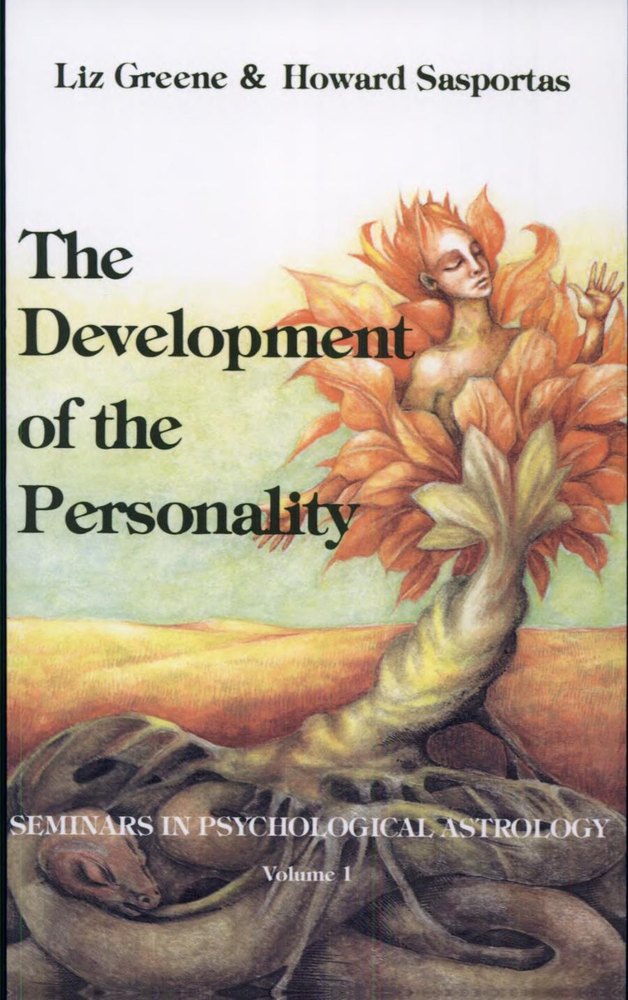
How you see your parents is partly an expectation you carry from birth.
Afraid of the Boss, but Afraid of Whom?
Your boss has never given you a hard time, yet every time you are called into the office, something in you tightens. You change jobs, you change bosses, and the tension follows you. At a seminar, Howard Sasportas imagined a woman like this: she has the Sun conjunct Saturn in the tenth house, and during a reading she mentions that she is afraid of her boss. Sasportas said he would not compare the two charts to see who had more fire planets. He would ask, one question after another: Whom else have you been afraid of like this? Is this fear familiar? Her answer is that as a child she was afraid of her mother, afraid her mother would not like her; if her mother did not like her, she would not look after her and would leave her. Asked further, she answers that then she would not survive.

If he simply told her, Sasportas said, “Don't be silly—you don't have to be frightened of him, you have more planets in fire than he does,” she would go away reassured, but in a new job the same fear would come back, because its source lies much earlier. The little girl inside her still feels that if she does not do as people in authority wish, she will not survive. So he goes back to her chart. The Sun conjunct Saturn speaks of someone who must build an identity through effort, bit by bit. The sentence in her, “I am afraid to be who I am,” can be recast as “I must work hard to develop my identity.” Both sentences lie within the meaning of Sun and Saturn; the second gives her something she can do.
The example comes from The Development of the Personality, published in 1987 and written by Liz Greene and Sasportas. The two ran the Centre for Psychological Astrology in London together, and the book records four one-day seminars given at the Centre as part of its three-year training in psychological astrology; it is also the first volume of the Seminars in Psychological Astrology series. The two took turns: Sasportas gave the first and third seminars, Greene the second and fourth. Along the way students break in, and some put their own charts up on the board for everyone to look at together.
The book is about how personality grows out of childhood. Sasportas holds that each stage of childhood awakens one part of the chart: the moment of birth is the Ascendant, birth to two years is the Moon, two to four is the Sun and Mars, and around four, when the child realizes the parents are a couple, it is Venus's turn. Greene goes on to the parents' marriage in the chart, that is, what kind of couple a person's inner parents make. In the third seminar Sasportas speaks of the several selves within each person, which the book calls subpersonalities, and in the fourth Greene speaks of the paired figures of the eternal youth and the old man. Taken together, the four seminars are about childhood experience: how personality takes shape, how it works, and how it is carried into adult love, work and relationships.
Nature First, Nurture Second
At the opening of their introduction, the two authors look back. Not so long ago, people came to an astrologer wanting to know about money, love and health, and when it came to character, the astrologer read from a “cookbook”: “You are a Gemini and therefore you are clever, versatile and articulate.” Such lists either told clients what they already knew, so they gained little, or failed to fit, and cast doubt on astrology itself. In recent years, and especially in the five years before the introduction was signed in November 1986, both the people who came and their reasons for coming had changed. Some were low for no apparent reason, some were anxious, some were in the middle of a relationship breaking down and wanted to see their way. Whether they like it or not, the authors say, astrological counsellors have taken over the role once held by the priest, the physician, and the psychiatrist.
Psychology had an old view of its own. Sasportas explains that some schools of traditional psychology held that a child is born a blank slate, and that how others treat him early on writes his later expectations of himself and of life, such as “those I need most will let me down.” Psychological astrology sees it differently: a child is born with expectations, and expects a mother and a father even before birth. The Moon represents the mother and the Sun the father; the signs and aspects of the Moon and Sun show what kind of mother and what kind of father this child expects. Sasportas admits that in reality nature and nurture are mixed together, but psychological astrology puts nature first and nurture second, because the child sees the parents through its own nature. He offers an image:
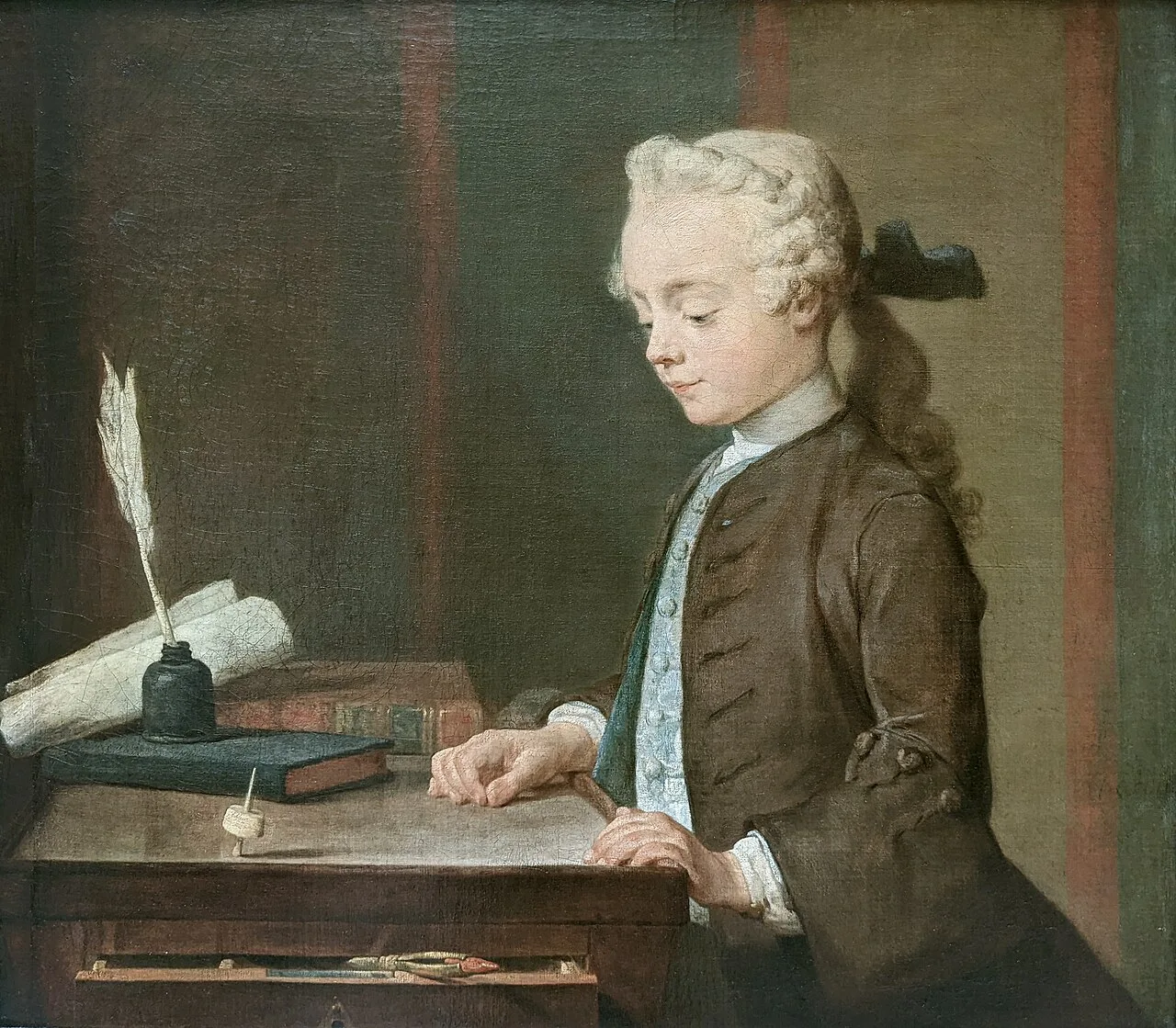
If we are wearing blue glasses, life looks blue. If we are wearing red glasses, life looks red.
What the book changes is the angle from which childhood is seen. Besides asking what the parents did, it asks what colour of glasses this child wore to look at them, and Sasportas believes those glasses are drawn in the birth chart. What the parents were really like still matters: the same expectation may be pressed down deeper by the parents, or eased.
The two authors draw on two lines of inheritance. For the stages of childhood, Sasportas uses the questions the psychologist Erik Erikson assigned to each stage, Basic Trust versus Mistrust from birth to two, Autonomy versus Shame and Doubt from two to four, and often cites the observations of Melanie Klein, Winnicott and Bowlby. For subpersonalities he uses the approaches of Piero Ferrucci, John Rowan and Diana Whitmore. Greene follows Jung: on the parents she draws on Erich Neumann's study of the mother archetype, and on the youth and the old man she recommends two books with differing views, one by James Hillman and one by Marie-Louise von Franz. The two bring these psychological perspectives into the chart, and what each person sees there is his or her own share of parents and childhood.
A Crying Baby
Sasportas opens his talk on childhood by making clear that we look back at childhood in order to sort out the present. Simply sinking into “what my mother and father did to me” is of no use; we need to go back only because the past is blocking the future. So when he talks about parents, he does not lay all the child's wounds at their door, nor does he say the child imagined it all.
He gives the example of a baby boy. This child has the Moon square Pluto, so his inborn expectation of his mother carries a trace of danger. One day his mother feeds him and lays him gently back in his cot, and he bursts into tears for no apparent reason. If the mother is provoked, shakes him and gets angry with him, the child's image of a bad mother is confirmed and pressed deeper. If she picks him up and stays with him until he has finished crying, without getting angry herself, the image is softened, and the child feels that perhaps she is not so bad after all. Sasportas suggests that a mother might read her baby's chart to see what the child is likely to project onto her, and learn to live with those projections. The Moon square Pluto is what the child brings; whether he is picked up is what the mother does. Only the two together make the mother in this child's heart.
He takes the same attitude with adults. A twenty-year-old woman comes for a reading. She has Uranus conjunct Pluto in Virgo in the tenth house, opposite the Sun and Mars in Pisces in the fourth. Her father left home when she was very young; her mother seems to her powerful and somewhat frightening, and she feels that she is weak and the world is frightening. It is hard to ask her to drop this belief altogether, because her early circumstances really did lead her to it. So Sasportas works with her to add a sentence beside the old one: the world is sometimes overwhelming, but sometimes people can be relied on, and I can have some effect in it too. He says:
We didn't deny her original life statement; we just tagged other possibilities onto it.
Later in the conversation, the Virgo–Pisces opposition made him wonder whether she might study make-up, bringing Piscean imagination and Virgoan craft together. She said she had been discussing exactly that with someone a few days before.
Does This Feeling Seem Familiar?
“Is this feeling of fear a familiar feeling in your life?” is, Sasportas says, a very useful question, and anyone can ask it of themselves. Say that early in a new relationship the two of you start contesting who is in charge. Greene's explanation is that if there was a struggle over who was stronger in the parents' marriage, it stays inside, so after five minutes with a partner one person is already being held down. She also found that people often find partners whose parental backgrounds are uncannily like their own: the two mothers, and the two fathers, may behave differently but are in essence interchangeable. Once you see this, the next time you quarrel you can tell which parts are reactions to the person in front of you and which belong to that earlier couple.
The other thing is no longer choosing only one side between two pulls. Sasportas speaks of love and will: the loving side fears that being too self-assertive will cost it love, and the willful side fears that going along with others too much will get it taken advantage of. When a person picks one side and pushes the other down, the suppressed side will sooner or later make trouble. His approach is what he calls time-sharing, giving the two sides time in turn. When you choose to go along with the other person, say to your self-assertive side: I haven't forgotten you; your turn will come. A side that is acknowledged does not feel neglected, and has no need to go to extremes to be heard.
Chapter by Chapter
The book opens with an introduction written by both authors, on the changes in astrological counselling described above. The main text is the four seminars, one per part, and the book ends with a reading list and an introduction to the Centre for Psychological Astrology.
Part One: The Stages of Childhood
Sasportas spends a whole day on Part One, from before birth to adolescence. Each stage has a question the child is asking inside. From birth to two it is: Can I survive, and how do I get love: by being quiet, by crying loudly, or by doing as I'm told? From two to four it becomes: What kind of person am I? Talking about the Ascendant, he likens it to the way a bird pecks itself out of an egg. The Aries-rising bird bursts straight out; of the Taurus-rising bird, one student says it would first look out of the window to see whether it was safe, and Sasportas adds that it will wait as long as it can, but once it feels it has to move, no one can stop it. This way of beginning reappears every time something new is to be started.
Toward the end of the day, he asks a student, Mandy, to put her chart on the board, and shows how to place these stages in specific months. He uses the progressed Moon. In secondary progression the Moon moves about one degree a month, so in the first years after birth, whichever planet the progressed Moon touches, the child feels that planet through the mother at that time. When Mandy was three months old, her progressed Moon conjoined Jupiter in the seventh house, and Sasportas guessed that her mother was in good spirits then and getting on well with her father. Mandy said her mother had married only a year before she was born and was very happy to have her. At six months the progressed Moon squared Pluto. He asked what had happened then; it turned out her mother was pregnant again, and not pleased about it.
Sasportas then asked whether anything like this had happened in her later relationships. Mandy said that every time she began a new relationship, opening her heart at first was lovely, but before long a sentence would rise up in her:
Wait, something will get you.
He said this was exactly the pattern of the Moon conjunct Jupiter and square Pluto: a relationship begins broad and open, and then fear and danger seep in little by little. Having traced the pattern back to her earliest experience with her mother, she could now watch how it appears in other relationships, first living it and understanding it clearly, and then thinking about how to use these planets more creatively.
Part Two: The Parental Marriage in the Horoscope
Greene's subject is the parents as a couple. The parents' marriage, she says, is not only the actual situation at home but also an archetypal image. To the child, the parents are the World Mother and the World Father, and only later become ordinary people; some never get that far in their whole lives. There is always a gap between the archetypal parents and two mortals, so no one is entirely free of difficulty over the parental marriage; what matters is what shape the difficulty takes. In this book the tenth house is taken as the mother and the fourth as the father. Greene says planets in the tenth or fourth house are like a red light coming on, a warning that an archetypal figure has dressed up as a parent.
On the two poles of the mother archetype, Greene says the Terrible Mother a person experiences is better understood as a woman gripped by the archetype; she herself is not that archetype.
No parent is an archetype.
Then a student says that her own Pluto is in the tenth house, and her mother really was like that, always in great pain, which she sensed from early childhood. Greene replies that no mother sets out to be Pluto; this mother most likely tried very hard to be a good mother. That is precisely the problem. To live up to an inner picture of a wholly good mother, she has to push down her own anger and needs, and what is pushed down is transformed in the unconscious, and the child still feels it.
So Greene does not advise people to become the opposite of their parents. The harder a person strives to be the opposite of a parent, the more that side drops into the unconscious, to surface sooner or later in his own covert behaviour or in his partner. She would rather people face in themselves the image they once projected onto their parents, and understand the parents' marriage anew through their own feelings; this, she believes, is how to live one's own chart creatively.
Part Three: Subpersonalities and Psychological Conflicts
In the third seminar Sasportas speaks of the several selves in one person. There is one way of being at work, another at home, another walking alone in the countryside, and people often shift between them without noticing. The book calls these parts subpersonalities. At the core of each is an archetype, so they grow up around the planets and signs in the chart. He likens the planets to the instruments in an orchestra, and the point at the centre of the chart to the conductor: the “I” that can see these selves and move between them.
He describes a case that ran to twelve sessions. Kathy came to him at twenty-nine wanting to work as a freelance designer, but spent her free time running errands for her boyfriend. Her Sun was in Virgo in the twelfth house, with Venus in Virgo only a few degrees from the Ascendant; Sasportas says such people confirm themselves by serving others. Kathy recognized this side at once and named it “the Super-Server”. As they talked, her posture and expression changed, and out came “Good Kathleen”, about four years old, with plaits. At that time her parents were not getting along, and the family was crammed into a small top-floor flat in New York. The household seemed unable to bear one more bit of trouble, and she felt she had to be good, that one wrong step would bring disaster.
Then “the Imp” appeared, chin in hand, sulking, and said in a flat voice that Good Kathleen was stuffy and boring and thought everything was her responsibility. Sasportas guessed this was the Mars and Uranus side of her chart; transiting Uranus was then approaching her Mars and Moon, and he judged it was time to let the imp out. He asked her how much of her present life belonged to Good Kathleen and how much to the imp. She said about seventy-five per cent and twenty-five, and that what she wanted was balance. Over the following weeks the imp grew livelier and she grew bolder about spending time on her own designs; around the twelfth session she received an important commission from a chain of shops. Sasportas sums up: she had moved from being compelled to serve to being able to choose to serve.
Part Four: Puer and Senex
In the last seminar Greene speaks of the eternal youth (puer) and the old man (senex). The puer is an archetypal figure representing the spirit in us that wants to rise above the body and the ordinary and fly upward. He lives among infinite possibilities, so beginnings always enchant him more than completions. The senex corresponds to Kronos, that is, Saturn, and stands for rules, order and time. Greene says the two figures cannot be separated: each mirrors the other turned upside down, and the puer never comes on stage alone.
The puer is easiest to recognize in the provisional life. This job is not the true vocation, this home is only a temporary stopping place, so none of it needs to be taken seriously; the real one is always waiting at the next turning. As Greene puts it:
For the puer, the Real Thing never arrives.
She speaks up for the senex too. The senex can weather life's upheavals without being broken, knows how to wait, can finish what has been begun, and does not reject reality for being flawed. These are exactly what the puer lacks. The same pair appears in love: while two people are falling in love the puer leads, and as soon as commitment arrives, with the prospect of a long life together, the senex takes the stage. Greene found that usually both partners' charts carry this pair of problems, and the side one person holds unconsciously is acted out by the other; after a separation, the one who played the puer often becomes the senex in the next relationship.
Greene's last caution is that finding the puer in a chart is no simple exercise. Archetypes cannot be equated with factors in the chart; one can only have a feeling for them. Only by amplifying the chart with psychological material can one see its living dynamics, which a string of scattered adjectives cannot give. She does offer one clue: in charts lacking earth, with strong air or fire, the puer is rather more at home. She also makes clear that this describes only one kind of person, and is not pathological.
How to Read This Book
The four seminars in this book were given in sequence, and the last three all build on the first, so begin with Part One, Sasportas on childhood. Part One reaches the age of about four, when the child begins to realize the parents are a couple, and Part Two has Greene starting from that couple. In Part Three, speaking of love and will, Sasportas expressly asks the group to recall what was said in the first seminar: love is central in the first years, and will emerges clearly only around two. The puer and senex of Part Four have already appeared in Part Three's discussion of change and preservation. Once you have read Part One, the charts of Mandy and Kathy are easier to follow.
The book has its difficult side. It is a transcript of seminars: students break in, the speakers wander off into their own stories, the pace is loose, and it takes some patience. The psychology is that of its time; on the stages of childhood it uses older psychoanalytic terms, and some of what it says reads as dated now. Some techniques in the book are the speakers' own experiments. Of using the twelfth house to see what the mother went through during pregnancy, Sasportas says he cannot remember whether he read it, discovered it himself, or made it up. Of tracing the Moon's separating aspects back to before birth, he says he has never read it in a book, and invites people to try it for themselves. Greene, for her part, warns that indicators in the chart are only suggestions; a theme counts only when it repeats. Most of the examples in the book are heavy family stories, and there is no need to apply each one to yourself as you read.
What the book teaches is universal, but everyone's glasses are a different colour, and yours have to be found in your own chart. Your Childhood Imprints in Depth follows the authors' order, reading from before your birth through to adolescence. Following the kind of calculation Sasportas made for Mandy, it sets out which natal planets your progressed Moon touched in the first seven years of your life, with the dates calculated precisely by software. Each time the progressed Moon touches a planet, your feeling for your mother in that period takes on that planet's colour, so you can see, month by month of your age, what your mother was like in your heart. Following Greene's view of the parents as a couple, it also reads the parental images in your tenth and fourth houses, to see how the parents in your heart get along. Beyond that it reads the several selves that grow from the most prominent planets in your chart, the one or two pulls from the book that are most evident in your chart, and how the puer and senex appear in it, and finally discusses how to live with what childhood has left behind. It reads only the imprints childhood has left on your chart; other matters need to be seen within the chart as a whole.
After the report, go back to Part One, and you will more easily recognize which of the questions Sasportas describes was one you asked as a child.
 Your Childhood Imprints in DepthSee report · $19