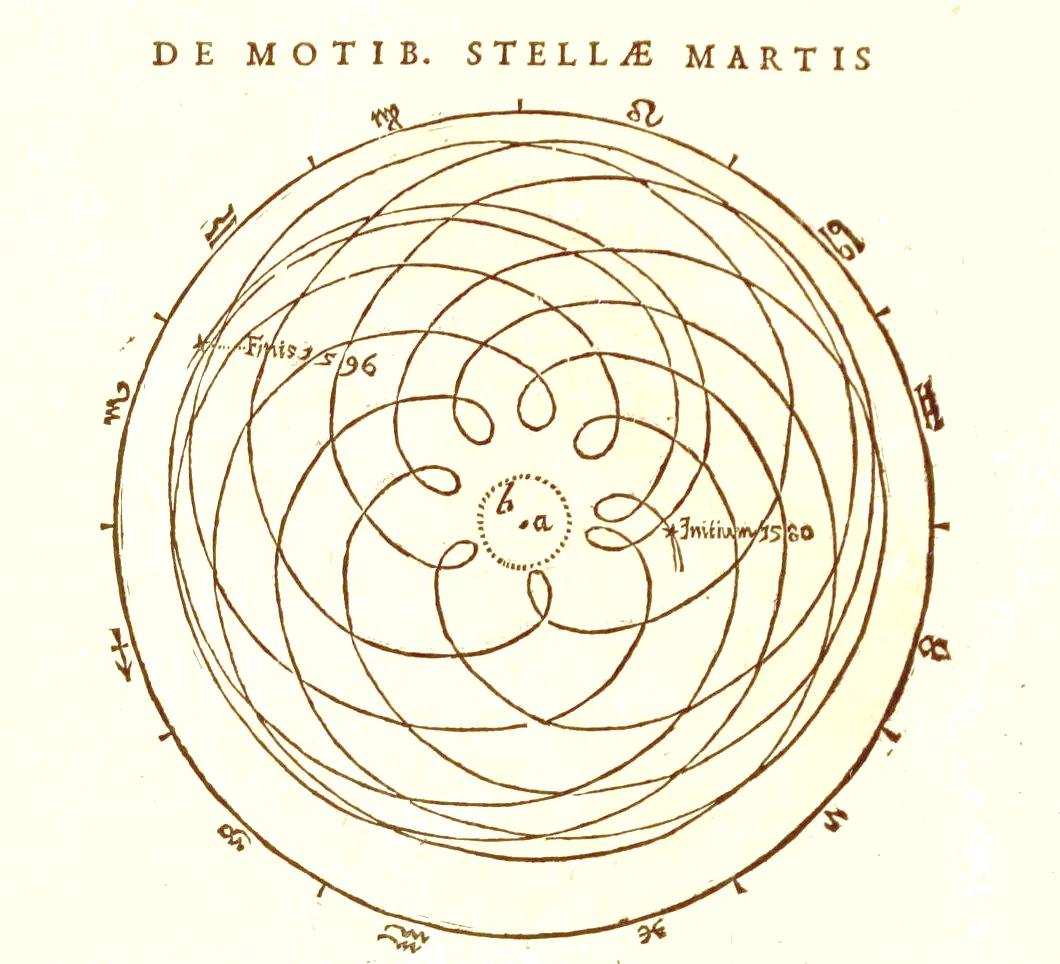
Retrograde Planets
Erin Sullivan

How to read retrograde planets in the birth chart, in progressions and in transits
The Question Behind the Book
When you draw up your chart, you will often see a small R beside one of the planets. Does it count for anything? Erin Sullivan asked exactly that in 1968. She was in Los Angeles at a lecture by Manly Palmer Hall, and when someone raised retrogrades she thought the mystery was finally about to be solved. The answer was that they meant nothing and could be ignored in the birth chart. Telling a Scorpio that something means nothing, she says, is like waving a red rag at a bull, and she couldn't accept it.
She came to astrology in 1964 through Rudhyar's The Lunation Cycle, and taught herself to cast charts from a Rosicrucian ten-year ephemeris. What she was most curious about was that R. In the early 1970s she noticed how regular Mercury's retrogrades were. Her first astrology talk, in 1973, given to about eight people, was on retrograde planets. In 1983 she put out a set of recorded talks on Mercury retrograde. More than twenty years passed between that question in 1968 and the first edition of Retrograde Planets: Traversing the Inner Landscape, published by Arkana in London in 1992. Samuel Weiser brought out a revised edition in 2000.
The book sets out to answer why a planet moves backward and what that means for a person. Sullivan's answer starts with the Sun. An outer planet turns retrograde as it nears its opposition to the Sun, when the Earth lies between the Sun and the planet. Mercury and Venus turn retrograde as they near their conjunction with the Sun, when they lie between the Earth and the Sun. Whichever planet it is, it is closest to the Earth while it is retrograde. Because retrograde motion is set by the Sun, Sullivan says that while the book openly discusses how the planets move, underneath it is really about the Sun. It has four parts and twenty-four chapters. Part One covers how retrograde motion comes about and secondary progressions, Part Two covers Mercury and Venus retrograde in the birth chart and by transit, Part Three covers the planets from Mars outward when they are retrograde in the birth chart, and Part Four covers their retrogrades by transit.
Sullivan gives the example of a man whose Jupiter turned retrograde by progression. That year his self-expression suddenly drew back inside him, and when the progressed Sun came to a trine with this retrograde Jupiter, he says, something finally broke through. Sullivan's conclusion is that progressions don't change the natal configuration. The birth chart is the seed, and as the progressed Sun moves through those aspects step by step, you can watch how that seed grows.
The Book's Contents
- Introduction
- Part One: Retrogression, How It Works
- The Mechanics of Retrogression
- The Sun and Natal Retrograde Planets
- Secondary Progression of Planets
- Part Two: The Inferior Planets Retrograde Natally and in Transit
- Mercury, God of Retrogression
- Venus, Dual Goddess
- Part Three: The Superior Planets Retrograde in the Natal Chart
- The Cycle of Superior Planets
- Natal Mars Retrograde
How Sullivan Departs from the Old View
In the Tetrabiblos, Ptolemy says that a planet moving slowly or retrograde is weakened and has less effect. In the twentieth century Charles Carter wrote that retrograde planets never quite give what people expect of them. Sullivan sets these older views among the quotations from well-known astrologers at the front of the book, and puts modern voices alongside them. Robert Hand says retrograde planets are not necessarily stronger, but they are closer to a person's center. Liz Greene says retrograde motion turns a planet's expression inward. The older view treated retrograde motion as a loss, and the newer one began to treat it as a turning inward.
The first thing she wants to change is how people look at retrogrades. She says astrologers either make too much of retrograde planets and look ridiculous, or ignore them altogether and look just as foolish, and both mistakes come from the same place: they look at the single retrograde planet and not at the system it belongs to. Take a person out of their family, their society and their times, and all that's left is a lone speck of dust. Some say retrograde motion is only how things look from the Earth and need not be taken seriously. She finds this close to absurd. If we on Earth see the planet move backward, then for the observer it is moving backward, and since we live on the Earth and actually see it, we can also feel it in our own lives. She also points out that every planet is closest to the Earth when it is retrograde, and so closest to the person, which means personal experience is magnified rather than weakened.
The second is that she deliberately says little about signs and houses. Her reason is that a retrograde planet's greatest power lies in the fact that it is retrograde, so it automatically has a relationship with the Sun, and its weight depends on where it stands in the whole chart: whether it makes an exact aspect to the Sun, whether it stands alone, whether it is cut off from the main body of planets. Writing a separate interpretation of retrogrades for every house and sign would, in her view, be wrong and misleading, and readers have to bring in their own knowledge of signs and houses.
This view has its sources. Her first astrology book was Rudhyar's The Lunation Cycle, and in her notes she says Astrological Aspects, by Rudhyar and Leyla Rael, is the best cyclical approach to retrogrades she has read, though she reads the two halves of Mercury's retrograde differently from him. For the psychological side she draws on Jung, and uses the Self and the ego, introversion and extraversion, to talk about retrograde planets.
Living with a Retrograde Planet
Sullivan sees a chart as a family. The Sun is the center, like the father, each planet has its own character and role, and the retrograde planet is the introvert of the family. She borrows a passage from June Singer on introversion and extraversion, puts “retrograde planet” where Singer has “introvert” and “direct planet” where she has “extravert,” and arrives at this sentence:
a retrograde planet operates as an introvert
A direct planet deals with the other planets, wants their approval and takes up their challenges, and knows how to accommodate and compromise. A retrograde planet lives in a world of its own, develops by some mysterious inner principle, and pays little attention to the rules the other members of the solar system have set, so it can become a maverick. But she is quite clear that a retrograde planet is not weaker or more repressed, and that it doesn't make the person an introvert. So where does the discomfort come from? From expectation. When a planet is retrograde, what a person expects in that area of life and what they actually meet often don't match, and when they don't find what they need, they withdraw and keep their feelings to themselves. She often hears that “Saturn retrograde means an absent father.” Her reply is that Saturn is retrograde five months of the year, and you can hardly say that everyone born in those months has no father. What really happens is that, whether or not the father was there, what these people expected of him and what they got were very different.
So what she prescribes for a retrograde planet is something it can throw itself into.
What a retrograde planet needs is a good obsession.
She says she has found again and again that the frustration a retrograde planet brings comes mainly from the person lacking something that drives them and that they can't let go of. In her consultations she also has a habit of saying nothing about retrogrades at first and talking only about what the planet itself rules. People usually recognize where their dissatisfaction and loneliness come from, and by then the only difference left between retrograde and direct is how the person experiences it. To her, a retrograde planet is a member of the family who has gone away. It may come home in triumph or in a sorry state, but it always comes back, bringing what it has seen far away, and then sets out again.
Progressed Stations and Retrogrades in the Sky
The planets of the birth chart stop and turn around in the progressions too. One day counts as one year, so the day after birth on which a planet stations gives the year of life in which it turns. Sullivan says the year a planet turns retrograde by progression is often when a chrysalis forms. The area of the psyche that planet stands for is wrapped in a cocoon and shut off from outside contact, and only some years later, when the progressed Sun trines it, does it open out, often into the person's specialty. When a natal retrograde planet turns direct by progression, she compares it to a dam bursting. Long-held feelings pour out and the person suddenly has a direction, and the longer the planet has been retrograde and the later it turns direct, the stronger the release. She describes a young woman with natal Venus retrograde who went to art school in the year her Venus turned direct by progression.
Look back at your own life this way and some years start to make sense: a time when you suddenly lost interest in something and drew back for several years, and then a year when it suddenly came clear and you moved outward again. Once you know the year a planet changes direction, you know which stretch is for drawing in and which is for letting go.
The same goes for retrogrades in the sky. Mercury is retrograde three times a year, and Sullivan calls this the mind's “down time.” Anything that can take the prefix re- belongs to it, redoing, rethinking, reorganizing, and it is as natural as sleep is to waking. The old rule of not signing contracts or starting new enterprises during the retrograde still holds, she believes. If something really can't wait, add a clause that allows for change, accepting from the start that plans may shift. Because Venus retrograde comes back to the same house every eight years, she asks people to look back eight years, since what was left unfinished then is likely to come up again now.
Chapter by Chapter
The book has twenty-four chapters, and many of the later ones are on transits or are case studies. They are taken below part by part, with some chapters grouped together.
Introduction and Chapter 1: The Mechanics of Retrogression
The first chapter sets out the astronomy, with plenty of diagrams. A faster car overtakes a slower one, and although both are moving forward, from the faster car the slower one seems to be going backward. That is how retrograde motion comes about. An outer planet's round with the Sun has ten points, from the conjunction through the square, the station and the trine to the opposition, and then back again. This chapter also gives how much of its time each planet spends retrograde: Mars about nine percent, and Uranus, Neptune and Pluto each more than forty percent.
Chapter 2: The Sun and Natal Retrograde Planets
This chapter covers how the Sun determines retrograde motion, and how retrograde planets fit with a person's character type. Sullivan describes two opposite kinds of people. One is an extravert, with a lot of fire, many planets in angular houses, the weight of the chart above the horizon and the cardinal signs strong, and only one planet retrograde, Mars. This Mars easily splits off from the rest. The person is warm and sociable, but when it comes to concentrating on carrying something through, they lose their way, and they often hand Mars's drive to a partner or friend to carry for them. The other is an introvert with no retrograde planets at all. The world around them feels mysterious, what they know inside doesn't match what they see, and only when some planet turns retrograde by progression do they find a way to express their own insight. So the same retrograde planet weighs differently in different charts, and she always puts it back into the whole chart.
Chapter 3: Secondary Progression of Planets
Since retrograde motion is set by the Sun's apparent motion, secondary progression shows it most clearly: the day after birth on which a planet stops and turns gives the year of life in which it changes direction. Whether a planet turns at all depends on which one it is. Someone born with Mercury retrograde will very likely see it turn direct by progression in their lifetime, and the same is likely for Venus, while for Mars it is only possible. From Jupiter outward, the planets are retrograde four or five months a year and may never turn by progression in a whole life, but they do receive aspects from the progressed Sun, and those years are turning points.
Chapter 4: Mercury, God of Retrogression
The chapter starts with myth. On the day he was born, Hermes stole Apollo's cattle and made their hooves go backward while he himself walked straight ahead, the first clue to Hermes' retrograde nature. She distinguishes two kinds of people on the road. A traveler has a starting point, a destination and an itinerary. A journeyer is simply somewhere in between and doesn't know where they will arrive. Retrograde motion is this experience of being in between, and Hermes is the guide of every retrograde cycle.
She also borrows David Peat's terms, calling Mercury direct the cycle of “attention” and Mercury retrograde the cycle of “awareness,” and says people need both. The discomfort of the retrograde comes less from the retrograde itself than from our refusal to take it as a teacher, and our insistence that the conscious mind should decide everything. During the retrograde, she says, we find that
life, like art, is discovery not design
The second half of the chapter also shows how Mercury's stations fall a little earlier each time, so that over about six or seven years they move backward through all four elements.
Chapter 5: Venus, Dual Goddess
What Venus retrograde brings back differs from what Mercury brings. It isn't information that can be put into words. It is a kind of knowing held in the body, which can only be acted out in relationships or in abstract images, so of all the retrograde cycles, Venus's is the least conscious at the time and makes the most sense in the long run. Sullivan tells of a girl who had a setback in her exams. What she sees is a girl who has set herself far too harsh a standard. The Venus inside her is crying out to be expressed, and she needs to learn to be at home in herself and stop measuring herself by her grades.
Chapter 6: The Cycle of Superior Planets
This chapter divides the round between the Sun and an outer planet into twelve stages and goes through each one, and it is the most technical chapter in the book. The mood of the station is suspense. The trine after the station is often the trigger for events. The moment the Sun opposes the planet she calls a “meltdown” aspect, when self-criticism and grandiosity show up together. The chapter also covers patterns. When the Sun is the focus of a yod, the “finger of God,” with a retrograde outer planet at each of the other two points, life is pulled in two directions, one of least resistance and one that takes more effort, and the person has to choose to let one go. She says it is the side of greatest resistance that leads to fulfillment.
Chapters 7 to 9: Natal Mars, Jupiter and Saturn Retrograde
The Mars chapter starts with Ares and Mars. The Greek god of war became, in Rome, a god who protected farming and craftsmen, and the sword became a plowshare, made of the same iron. People with Mars retrograde often feel their drive has been stolen, and the “thief” is often taken to be the father. What they need to do is turn the fight back on themselves, with themselves as the opponent, the way an athlete goes after a “personal best.”
In charts with Jupiter retrograde, the common threads she has found include a split in the family's social or religious background, along with a strong identification with one's own tribe. These people often have to leave where they came from before they find their own “tribe.”
The Saturn retrograde chapter likens Kronos, who swallowed his children, to a “pregnant man” who keeps what ought to be born from being born, so as to preserve the way things are. In people with Saturn retrograde, the screen between the ego and the outside world has minute holes in it, and they care a great deal about whether they are accepted. Those who make things often don't trust their own work and can't release it until others approve. The house of retrograde Saturn is the most anxious place in the chart and the one that most needs a push of courage, and the Sun's sign and house are where creativity works best.
Chapters 10 to 13: The Planets Beyond Saturn
Uranus, Neptune and Pluto are often called generational planets, shared by everyone born in the same years. Sullivan doesn't agree that they belong entirely to the collective. She says the outer planets have their own meanings and also mean something for the individual. A person has to “grow into” the power of the outer planets, the way one grew into the new winter coat, a size too big, that mother bought in the fall, and they can be used more consciously after the Saturn return.
The last three chapters take one planet each. The Uranus chapter says that when a breakthrough in ideas is joined to a focused will, what is original in a person finds a steady outlet. The main point of the Neptune chapter is that the ego has to be able to hold Neptune rather than lean on it for support. Illusion itself does no harm. The harm lies in not knowing where the illusion ends and reality begins. The Pluto chapter is about existential loneliness, and being alone need not mean being lonely.
Chapters 14 and 15: Two Case Studies
Chapter 14 uses a playwright's chart to show how, when several outer planets are retrograde, the progressed Sun brings out what is hidden in each of them one at a time. Sullivan makes a point of saying that her interpretation of each planet is only a demonstration and should not be taken as a rule for reading. Chapter 15 is a fifteenth-century mundane chart.
Chapter 16: Overview
Part Four turns to transits. Its opening sentence says that retrograde periods are unavoidable, necessary and useful, but often come with a tension, a feeling that “something has to give.” She divides a transiting retrograde round into two halves. From the station to the Sun's opposition is a time of unconscious reaction, when old things come loose and it is easy to overreact. After the Sun's opposition comes a time of conscious weighing and putting things back together. The three to five houses opposite the retrograde planet, which the Sun crosses during this round, are where frustration comes most easily. The house the Sun is in when it opposes the planet is where the Sun shines on that planet, and may also be where the most comes of it.
Chapters 17 to 19: Transiting Mars, Jupiter and Saturn Retrograde
Mars is retrograde only once every two years or so, and by then people have long since settled into its direct motion, so when it turns retrograde it disrupts daily life more than any other. Telling people not to sign contracts while Mars is retrograde is easy, but getting them to actually wait two and a half months is hard, though there are plenty of cases where the wait later proved a blessing. Jupiter turns retrograde when hopes are high, and things suddenly come to a halt. Something on the verge of completion slips back, and looking back later, people often find it was better that it did. The Saturn chapter explains that the same degree is crossed three times, about nine months from first to last. What is planted on the first pass is incubated and comes down to earth on the last, and Saturn hands over what it has kept sealed away.
Chapters 20 to 23: Transits of the Planets Beyond Saturn
The outer planets stay in one house for years and spend nearly half their time retrograde, so half of the psychological work gets done during retrogrades. Some say that when a planet goes back over the same degree, old events repeat. Sullivan disagrees. During the retrograde all the other planets have moved on, and the Sun's relationship to the whole chart has changed completely, so
There is no ‘return’ at all, but simply another view from the same zodiacal location.
She describes two patterns. In one, the outer planet stations retrograde right on the natal point, and about a year and a half later stations direct near it again. In the other, it passes direct, comes back retrograde and passes direct once more, and these three contacts correspond to the stages from conception to birth. She asks readers to look for themselves: the natal planet swept most often by retrogrades over a lifetime is where the chart holds the richest information about character.
Chapter 24: A Case of Transiting Retrogrades: Jude
The last chapter sets out, month by month, one person's outer-planet transits over nine years. The point is to show that a configuration swept again and again by the outer planets is a complex waiting for its trigger, and becomes a pivot in a person's life. He has no natal retrograde planets, so the case can be read alongside the kind of chart described in Chapter 2.
How to Read This Book
Sullivan herself asks to be read from start to finish. Retrogrades, she says, have to be seen within the whole system that produces them, and looking up one planet's chapter breaks up the rhythm of that system. Still, the cycle diagrams and tables of degrees in Chapter 1 can stop a beginner in their tracks. You could read the introduction and Chapter 2 first, to get hold of the idea that retrograde motion is a relationship between a planet and the Sun and that a retrograde planet is like the introvert in the family. Then go back to the diagrams in Chapter 1, read the chapter in Part Two or Part Three that matches the retrograde planets in your own chart, and finish with Part Four, reading it alongside the retrogrades in the sky right now.
The book first came out in 1992, and many of its examples belong to the 1980s and 1990s, so the famous people and current events it mentions now feel distant. Myth and psychology take up a great deal of space (Hermes and Aphrodite, the Mesoamerican myths of Venus, Jung's shadow), and readers who only want technique will find it roundabout. She also explains that she is cautious about Uranus, Neptune and Pluto retrograde in the birth chart unless they are in close aspect to the Sun or the personal planets. And she deliberately avoids writing interpretations of retrogrades by sign and house, so readers need to be able to read signs and houses themselves to follow her thinking.
The book gives you the method. Your Retrograde Planets in Depth works out, step by step and in Sullivan's order, which planets in your chart carry that R and in which year, if any, each one turns. For the eight planets from Mercury to Pluto, it finds where each stood in its cycle with the Sun at the moment of birth and which of them were retrograde, reads the retrograde ones closely in her terms, and for the direct ones explains how far along they are in their round with the Sun. It finds which planets turn by progression before age ninety and in which year, with the years calculated exactly, and if your chart has retrograde planets from Mars outward, it also works out the years when the progressed Sun aspects them. The retrogrades in the sky over the next two years are marked house by house in your chart too. The report then reads all of this together and turns it into practical advice on living with the rhythm of retrogrades. If your chart has no retrograde planets at all, the report is just as complete, because Sullivan discusses this kind of chart specifically. The report shows where each of the eight planets is in its cycle, and whether any planet turns retrograde by progression and in which year. It looks only at retrogrades and does not replace a reading of the whole chart.
Sullivan wouldn't accept that the R “meant nothing,” and after more than twenty years of following the question, her conclusion was that a retrograde planet is no weaker. It is simply closer to you.
 Your Retrograde Planets in DepthSee report · $19
From the chart to a written reading
The reports below are written readings, sent as a PDF by email.