Person-to-Person Astrology
Stephen Arroyo
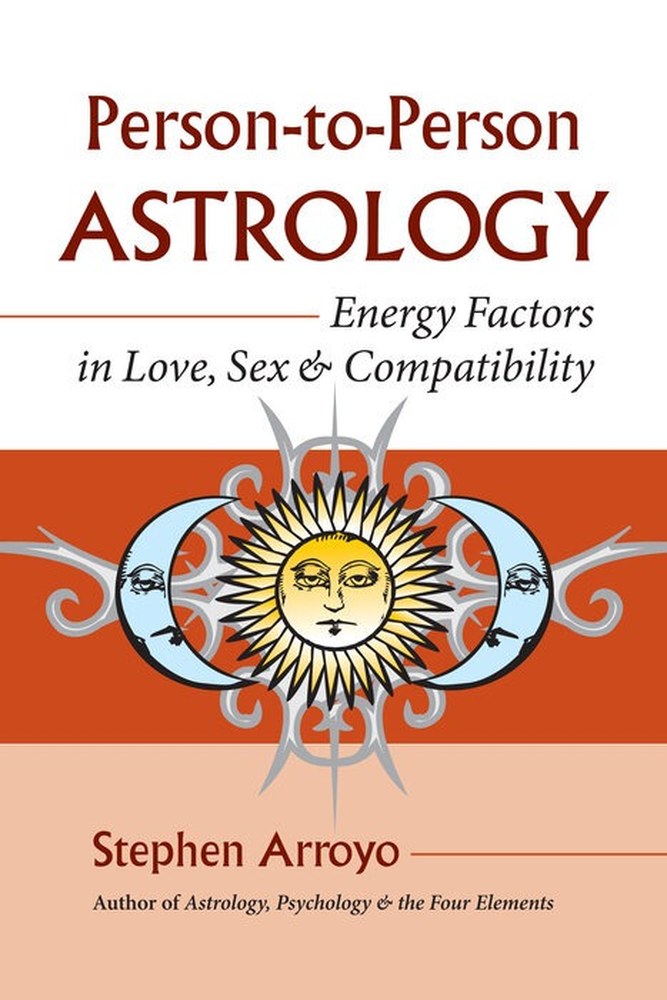
Reading a relationship through energy and the four elements.
The Energy Between Two People
Whether two people get along, Stephen Arroyo says, is first a question of energy, before love comes into it. In Person-to-Person Astrology he quotes a therapist: with some people, you come within ten feet of them and feel as if a pint of blood had just been drawn out of you. Around some people your breathing tightens and your voice goes weak. Around others, however hard or tiring things are, you feel accepted and appreciated. Arroyo says this exchange of energy between people is so real you can feel it in your body. He means this literally.
Arroyo calls this “energy nourishment.” Everyone needs to be nourished, and two people feed and stir each other in some areas and drain and block each other in others. The most precise language for describing this, he thinks, is the ancient four elements, Air, Fire, Water and Earth. It is simple and belongs to no single culture or sex, and systems of elements have appeared in cultures around the world for at least three thousand years.
The book came out in 2007. Arroyo had published a book on relationships in 1980, Relationships & Life Cycles, and he says this one is far more complete: it rests on much more research, has twenty-five more years of experience behind it, and includes the words of people from hundreds of questionnaires and interviews. It is written mainly for general readers who haven't studied astrology and know little beyond their Sun sign. It begins with why astrology can be used to look at relationships, goes on to the energy between two people, the four elements, the twelve signs and the rising sign, then the Moon, then Venus and Mars by element and by sign, and closes with two chapters on the aspects between two charts and on using chart comparison wisely. One point comes back throughout: the Sun sign alone can't explain a person's emotional nature, and the Moon, Venus and Mars all have to be brought in.
For the word “compatibility,” Arroyo goes back to its Latin root, cum passus, meaning “stepping together.” He likes the image a great deal: two people walking forward together at a pace that suits both, not looking to each other for all their satisfaction in life, and facing whatever comes as it comes. Many contented couples, asked why things are good, can only say, “We just get along!” He adds that the word is close to “compassion,” like two musical instruments vibrating in sympathy. Compatibility for him is always something in motion: two people flowing together on an energy level, supporting each other and heading the same way in life. The book takes that one sentence, “We just get along,” apart, and looks at where two people's energies move in step and where each goes their own way.
The Book's Contents
- Introduction
- Compatibility and the Language of Relationships
- Should I Really Take Astrology Seriously? Replies Throughout the Centuries
- Love, Sex, and Relationships: Throughout History and Today
- Astrology in the Twenty-First Century: A New Viewpoint
- How Astrology Amplifies Our Understanding of the Energy Interaction Between People
- The Four Elements, the Twelve Signs, and the Rising Sign
- The Moon: The Moods We Can Live With
Astrology as a Language of Energy
What Arroyo dislikes most is the habit of passing verdicts on relationships. He opens the chapter on aspects by clearing away superstition. Most of the aspect interpretations in astrology books, computer programs and websites are oversimplified, cast in a black-and-white frame of good and bad, compatible and incompatible, success and failure, worded crudely and in absolute terms, and psychologically harmful. He borrows a line from Anthony Robbins to remind readers that the words we attach to our experience become our experience. The other kind of oversimplification comes from the Sun-sign columns that fill newspapers and magazines, which teach people to look only at the Sun and leave out the Moon, which matters just as much. At the start of the book he makes clear that real astrology never sorts people into twelve baskets.
What he did instead was treat astrology as a language of personal experience. His first book, Astrology, Psychology and the Four Elements, published in 1976, was the first to define astrology as a modern, precise “language of energy,” and that is the thread of this book too. In an appendix at the end he gathers this language into a few definitions: the elements are the energy substance of experience, the signs are patterns of energy, the planets regulate the flow of energy, the houses are fields of experience, and the aspects show the dynamics and intensity of experience. He says plainly that these definitions answer the old approach of trying to squeeze an outer event out of every placement.
This way of thinking goes back to Jung. Arroyo came to astrology by reading what Jung thought of it, read more than half of Jung's collected works, and later visited Jung's daughter in Switzerland, herself a practicing modern astrologer. Jung studied the chart comparisons of nearly five hundred married couples. Of the four cross-chart aspects that turned up most often, three involved the Moon, and the fourth was Mars conjunct Mars, and from this Arroyo says that harmonious Moon aspects between two charts matter especially for lasting harmony at home. He also mentions Dane Rudhyar: after coming up with the phrase “mathematical biography,” Arroyo remembered that Rudhyar had called astrology “the algebra of life” as early as 1936, in The Astrology of Personality.
There is one more thing he cares about himself. In 1980, in Relationships & Life Cycles, he defined Mars as the “male ego” and Venus as the “female ego,” twelve years before John Gray published Men Are from Mars, Women Are from Venus, and Gray later admitted, in a foreword to someone else's book, that his ideas had been directly influenced by astrology. Yet in this book Arroyo says again and again that the masculine and feminine he describes are two principles, not men and women themselves, and the signs a person's Venus and Mars fall in tell you more than whether that person is a man or a woman.
Arroyo on How Different People Are
Arroyo has led several discussion groups on relationships, mostly women who knew some astrology. The same placement that one member saw as a flaw, another saw as a virtue. Arroyo says he has seldom been reminded so vividly that we all see other people through our own lenses.
“People are innately different, immensely so” is where Arroyo's whole book starts. Many people assume, for instance, that others are really like them deep down and just haven't said so. Look at a dozen people you know through astrology, he says, and that idea soon falls apart. So he doesn't advise people to remake each other. He advises them to see clearly that a person's qualities come as a package, and if you want the strengths you take the other side along with them:
If you want the passion of Scorpio, you will also have to deal with their jealousy and paranoia.
Arroyo says that no longer expecting a relationship to match all your ideals is a sign of growing up in intimate life, and that the most valuable thing astrology offers is the confirmation that each person's natural way of being is right as it is. He calls it a kind of validation from the cosmos of who a person really is, and says it can help people let go of excessive self-doubt. He also says the worst harm done by the simplified ideas popular today is that they make people distrust their own unique emotional nature.
What Keeps Two People Together
Arroyo deliberately puts the Moon chapter before the chapters on Venus and Mars, because however strong the attraction Venus and Mars bring, it may not last. In his own words:
What attracts you (Venus and Mars) may not sustain you (the Moon)
He offers a question to test whether two Moons get along: ask yourself whether you could drive across the country with this person for several days and stay relaxed the whole way, or whether you would be awkwardly searching for things to say.
If months of reasoning with a strongly Earthy partner get you nowhere, Arroyo says what most often makes them see the problem is actually leaving for a while. People strong in Fire have big ideals, and luckily they can often keep busy with their partners on endless plans, convincing themselves and each other that “we're very happy.” He adds in parentheses that Fire signs tend to be positive thinkers. The worse two people are matched, the more they need to create a romantic atmosphere to bring them closer, but if that atmosphere doesn't rest on a real flow of energy, one wrong word breaks it.
Arroyo wants readers to tell two things apart: mismatches that come only from two people's energies being different, which needn't mean either one doesn't love the other, and the places worth the effort of adjusting. From hundreds of clients he saw that many troubles in intimate relationships are just old-fashioned incompatibility, and he estimates that most couples have to adapt consciously to some degree of emotional incompatibility.
Chapter by Chapter
The book has eighteen chapters. The first four explain why astrology can be taken seriously as a way of looking at relationships. Chapters 5 through 8 set up the framework of the elements, the Ascendant, the Moon, and Venus and Mars. Chapters 9 through 16 go sign by sign through Venus and Mars, and the last two cover the aspects and how to use chart comparison. Apart from one page of definitions of energy, the appendices are mainly tables for looking things up.
Chapters 1 to 4: Compatibility, Astrology's Reputation and the History of Relationships
The first four chapters are written for people who doubt astrology. Arroyo started out as a doubter himself. Decades ago he got so angry that he threw several astrology books across the room and swore he would spend no more time on it, and still he was pulled back again and again. Chapter 2 answers “why take astrology seriously,” and his answer is short: to see more. The theories we hold decide what we can see, and if the theory is too narrow, so is the life we can see. He tells the story of the astronomer Percy Seymour, who had no interest in astrology until he heard colleagues attack it emotionally, went to look at the “refutations,” and found them entirely unscientific.
Much of Chapter 3 is about attitudes to the sexes in Western society, and you can skim it. What to take from it is “polarity”: complementary poles such as yin and yang, or creating and receiving, stir each other, and without experiencing polarity you can't experience the drive of life. That leads him to say:
In the domain of relationships, the ideal is the enemy of the real.
He goes on to explain that with an ideal you have perfection in your mind but not necessarily life, and with polarity you may have conflict, but you also have energy flowing and possibility. Chapter 4 places astrology between the humanities and the sciences, with both a quantitative and a qualitative side.
Chapter 5: The Energy Interaction Between People
This chapter covers how the four elements work between two people. Arroyo says a person's element shows what feels “real” to them. Air finds concepts most real, Fire lives on inspiration and is driven by aspiration, Water finds emotions and longings most real, and Earth finds material form and practical needs most real. So two people of different elements often can't even agree on what matters, because what each counts as “real” is different to begin with.
The chapter also corrects a claim you often hear. People are often drawn to the elements they lack, and some writers say such pairs “complement” each other ideally. Arroyo says this sounds fine on paper, but in practice few people can live closely with such a partner for long and feel satisfied. He puts more weight on the elements of the Sun and Moon: when two people's Suns and Moons blend, they recognize and nourish each other, and that lasts far longer than the traditional “love indicators” such as Venus to Venus or Venus to Mars.
Chapter 6: The Four Elements, the Twelve Signs, and the Rising Sign
Arroyo thinks the Ascendant is seldom explained well, because many books only talk about appearance, so he goes into it at length here. The element of the Ascendant is a spontaneous, often unconscious energy. People call it the “image of the personality,” and he adds that this image isn't deliberately projected. It is automatic, and others see it at a glance. He writes the rising signs from experience, in a casual tone, and says he cares more about getting it right than about style. A Sagittarius rising, ten minutes after a setback, is optimistic again. A Taurus rising stays calm in a crisis but insists on doing everything at its own pace, which often drives the people around it frantic. The Ascendant also changes how the Sun is expressed. Gemini rising speeds up a slow Taurus Sun and makes a Cancer Sun less shy, but a person's core is still set by the sign of the Sun.
Chapter 7: The Moon and the Moods We Can Live With
There are thousands of books on Sun signs and very few that go deep into the Moon. Arroyo's explanation is that the Moon is more subjective and less conscious, and you need an accurate chart to know its sign. If you remember one phrase for reading the Moon sign, he says, make it “instinctive reaction.” The Aries Moon is the bluntest and never seems to take advice. In fact these people need to feel they aren't influenced by others, so they seem not to be listening. Often they have heard it all and, after thinking it over, accepted it, and months later it slips out.
The journal of the Astrological Association of Great Britain reported on a group divided by the element of the Moon to talk about home and mothers. The Earth group kept coming back to the word “comfort.” The Fire group wanted home to be a lively center of activity and had only “respect” to say about their mothers. The Air group found it hard to talk about emotions apart from everything else, and the Water group didn't want to open up in a group.
Chapter 8: Mars and Venus
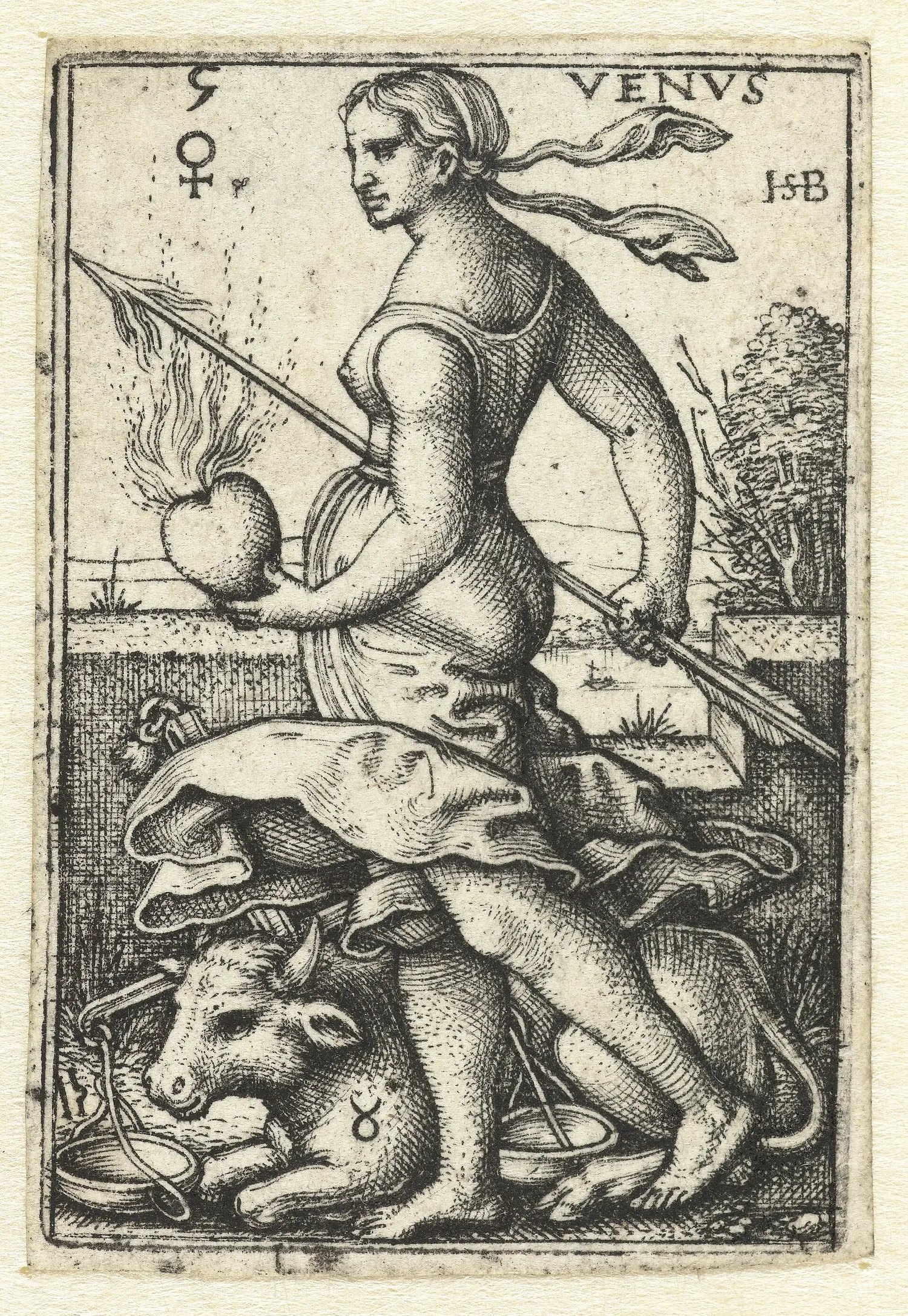
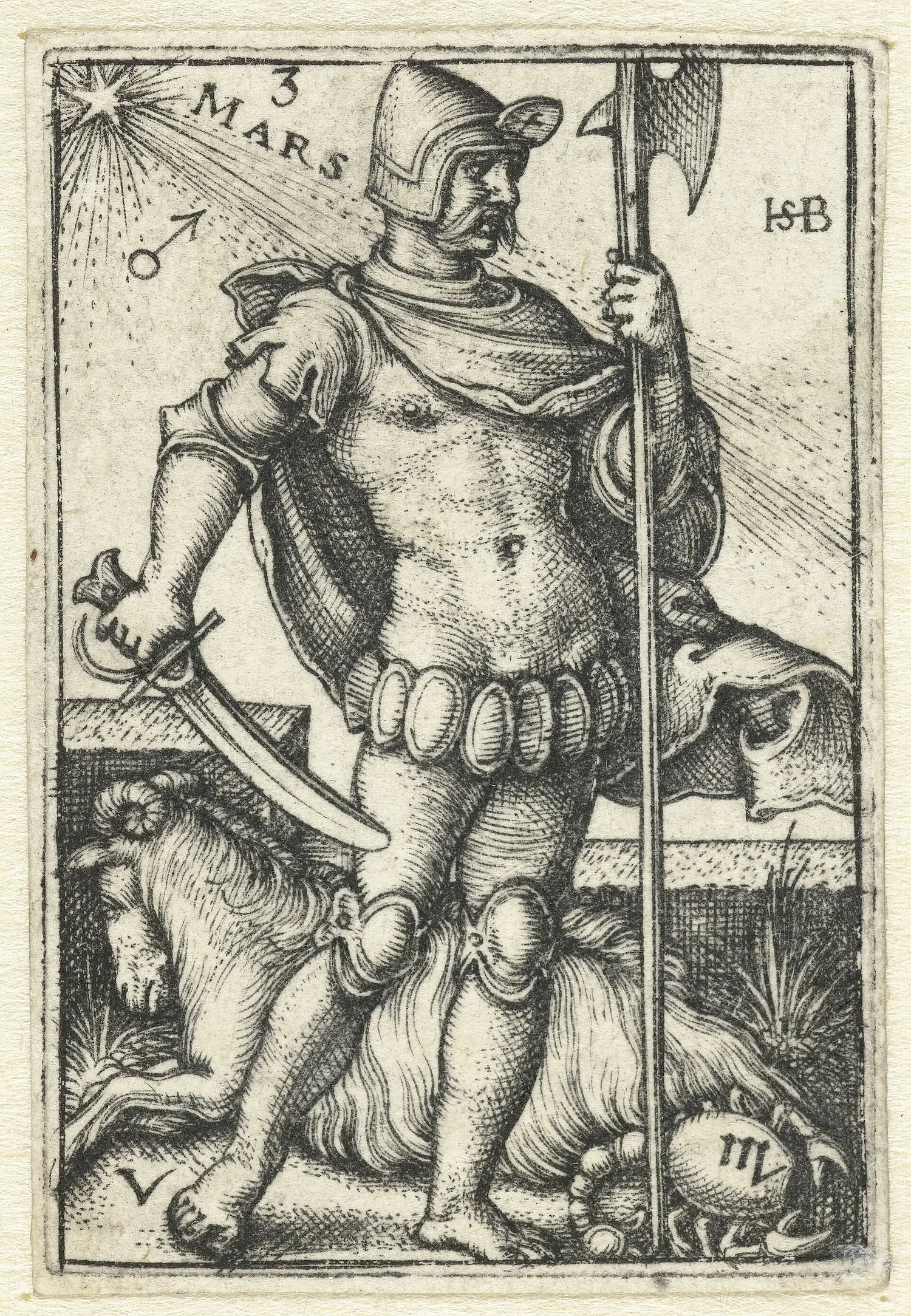
A Latin phrase Arroyo often uses is “there's no disputing taste,” and the planet that shows taste best is Venus: how you give and receive, and what you find appealing. Mars is the will to act and the way you get things done. The chapter also covers anger, through a group study that sorted people by the element of Mars. Mars in Air rationalizes anger, and Arroyo's own observation is that the surest way to anger them is to insult their intelligence. Mars in Earth finds anger too tiring and would rather turn it into work. Mars in Water finds anger hard to voice and lets it build slowly. Mars in Fire is the only group that sometimes enjoys losing its temper. Writing about Mars in Taurus while he was living in Spain, he compares it to the bull in the ring that is slow to anger: it wants to be left alone, is provoked again and again, and only then paws the ground, gathers itself and charges.
He spent twenty years studying athletes' charts, basketball and baseball among them, because watching a game shows a person's energy style directly, without words and social poses in the way. From this he arrives at a judgment he stresses repeatedly: Venus and Mars must never be read apart from the Sun, because the element of the Sun flows through every other planet in the chart.
Chapters 9 to 12: Venus in the Fire, Earth, Air and Water Signs
Each of these four chapters covers three signs. For each sign there is a general description, then the three “essentials” he has distilled over decades, then separate notes on men and women, and finally the words of people from interviews and questionnaires. Venus in Leo shows affection by sending not a single rose but a whole flower shop. Venus in Earth slows the people around it down and lets them live in the present. With Venus in Air, feelings have to pass through thought first, and many of these people sort out what they feel by keeping a journal. Venus in Water is especially sensitive to criticism, but Arroyo points out that this openness isn't weakness, and there is often a surprising strength underneath. When you read, find your own Venus and the other person's first, then read the other two signs of the same element, which gives you more than reading straight through.
Chapters 13 to 16: Mars in the Fire, Earth, Air and Water Signs
The four Mars chapters follow the same pattern as Venus, and they are about how a person takes the initiative and goes after what they want. Mars in Fire looks best when everything is going well, and Arroyo says the real test comes with conflict, disappointment and not getting quick satisfaction. Mars in Earth is the most efficient at getting things done, but it is good at “using” things and people, and in close relationships that becomes the biggest obstacle. Mars in Air has to be engaged in the mind before it has the physical energy to see something through. Mars in Water often asserts itself indirectly, in ways others don't follow, and others can't see how much these people get done.
People who go straight at things are often frustrated by this roundabout persistence, but Arroyo says the seemingly indirect approach is often surprisingly creative.
Chapter 17: The Aspects, Energy Interactions Between Planets
Aspects between two charts are the business of this chapter, and Arroyo says himself that it is only an introduction. He sets out a few guidelines first. The tightest aspects come first, and the type of aspect ranks below the nature of the two planets. Jupiter conjunct the Sun and Jupiter square the Sun, for instance, both show up as encouragement of optimistic self-expression, the square often with a bit more excess. Years ago he coined a name, the “double whammy”: the same two planets forming close aspects twice between two charts, back and forth. If Jane's Venus squares Jim's Uranus and Jim's Venus is conjunct Jane's Uranus, that is the core energy of the relationship. He also works out the probabilities for the reader: the wider the orbs, the less precise the information, until it means nothing, because astrology is more than a symbolic art onto which anyone can project anything.
Chapter 18: Using Astrology and Chart Comparisons Wisely
The last chapter is about attitude. Arroyo says astrology used rightly is for deeper understanding and a more conscious life, not for escaping responsibility or dreaming up a perfect answer. When you look at a chart comparison, don't rush to judge. The key question is what the two people want from the relationship, and what people care about changes with age. In the checklist at the end of the chapter he singles out one item: aspects between one person's Ascendant and the other's planets are given far too little weight in most books of this kind. He also admits that some long and successful couples seem to break many of the rules of chart comparison, and then you have to look at the whole. These two may come more alive through periodic conflict, or may need a good deal of psychological distance from a partner. The appendices include a Moon sign table, Venus and Mars sign tables from 1927 to 2000, and a table for estimating the Ascendant, and he stresses that the Moon and Ascendant only count when the chart is cast accurately from an exact birth time.
How to Read This Book
To put it to use quickly, start as Arroyo suggests by finding which elements your Sun, Moon, Venus and Mars are in, and the other person's. Then read Chapters 5 and 7, and turn to the signs of the two of you in the Venus and Mars chapters. The first four chapters, which defend astrology and discuss social attitudes, can wait until last.
The book has its limits. It describes Western society at the start of this century, and many of its remarks about men, women and social attitudes carry the author's own position. He admits he will offend “political correctness,” and some of it grates today. The sign-by-sign descriptions are generalizations, and he says at the outset that writing about a single astrological factor can't help leaving out many exceptions. It is also an introductory book. Uranus, Neptune and Pluto, he says, are beyond its scope, the houses in chart comparison are left to his Relationships & Life Cycles, the Venus and Mars tables in the appendix stop at 2000, and the Moon and Ascendant tables only give an estimate.
Reading two charts together is the work this book leaves to the reader, and it is also where it is easiest to get lost. Arroyo himself says a beginner faced with a chart comparison can find it bewilderingly complex. The Energy Between Your Two Charts in Depth does that reading for the two of you. When you order, you give the date, exact time and place of birth for both you and your partner, and the report is only for romantic partners and spouses.
It starts with the four elements, counted for each of you and then looked at together. Next come the Sun and Moon, which Arroyo values most, whether your two Moons can live together day to day, the temperament of your two Ascendants, and how each person's planets meet the other's Ascendant. Then it takes each person's Venus, how it shows affection, and each person's Mars, how it goes after things and how it gets angry, and whether Venus and Mars sit easily by element in each person's own chart. Then comes the center of the book: where the two people's Venus and Mars spark and where they miss each other. Mercury shows whether you can talk to each other, and Jupiter and Saturn show who encourages whom and who steadies whom, along with beliefs and attitudes to money. Uranus, Neptune and Pluto are read only when one of them makes a close aspect to the other person's Sun, Moon, Mercury, Venus or Mars, and aspects where the same two planets meet twice across your charts only when your charts have them. Finally it brings all of this together and says which layer of the relationship takes least effort and which takes the most. It doesn't score the relationship, and it doesn't decide for you whether you are suited.
In the aspects chapter Arroyo cites Seneca's point that if you don't know which harbor you are sailing for, no wind is favorable. He says that if two people have no common goal or direction, whether they are compatible isn't worth much analysis.
 The Energy Between Your Two Charts in DepthSee report · $19
From the chart to a written reading
The reports below are written readings, sent as a PDF by email.